In the highly competitive digital world we live in, entrepreneurs and digital marketers have a common enemy: time. Between sending emails, posting updates on social networks, analyzing customer data, and qualifying leads, the list of tasks for the digital marketer of the present seems endless. If you are trying to accomplish all these tasks manually, you are probably reaching a growth ceiling.
This is where Digital Marketing Automation comes to save the day.
In the following article, we will cover what digital marketing automation is, the benefits you will surely attain, the areas you should focus on, and a step-by-step guide on how you can accomplish it.
What is Digital Marketing Automation?
Fundamentally, Digital Marketing Automation is the practice of using software and technology to automate repetitive, routine marketing tasks. It is intended to help companies market successfully across multiple channels on the web (email, social networks, websites, and blogs) and automate useful tasks without any intervention.
But it’s not just about saving time; it’s about getting the message to the right person at the exact right time.
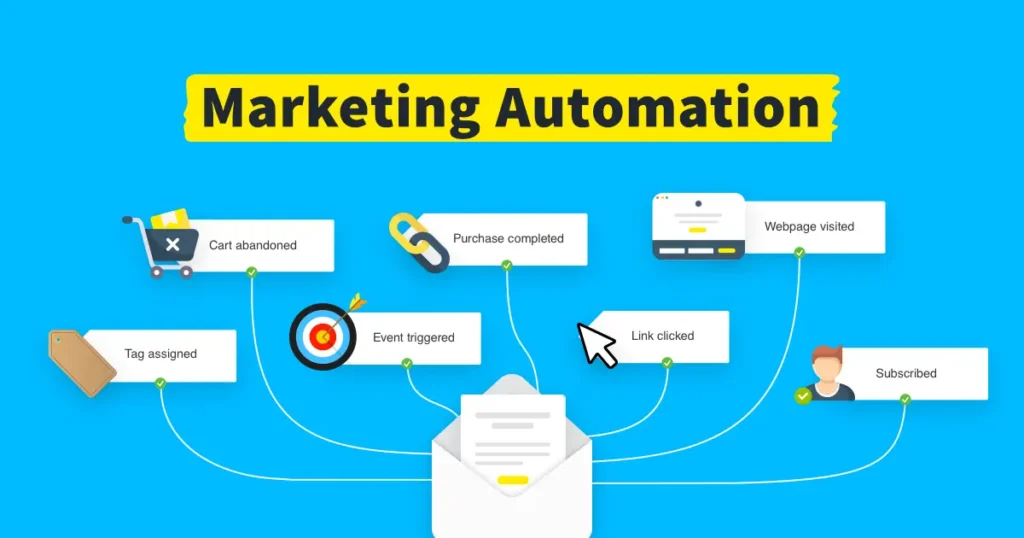
Example: For instance, let’s say someone visits your site and decides to download your free e-book. Instead of having to email it to them manually, the digital marketing automation system can send it to them right away and classify them as a “Lead,” and then send them a series of emails over the course of two weeks that educate them on why they need to buy your product.
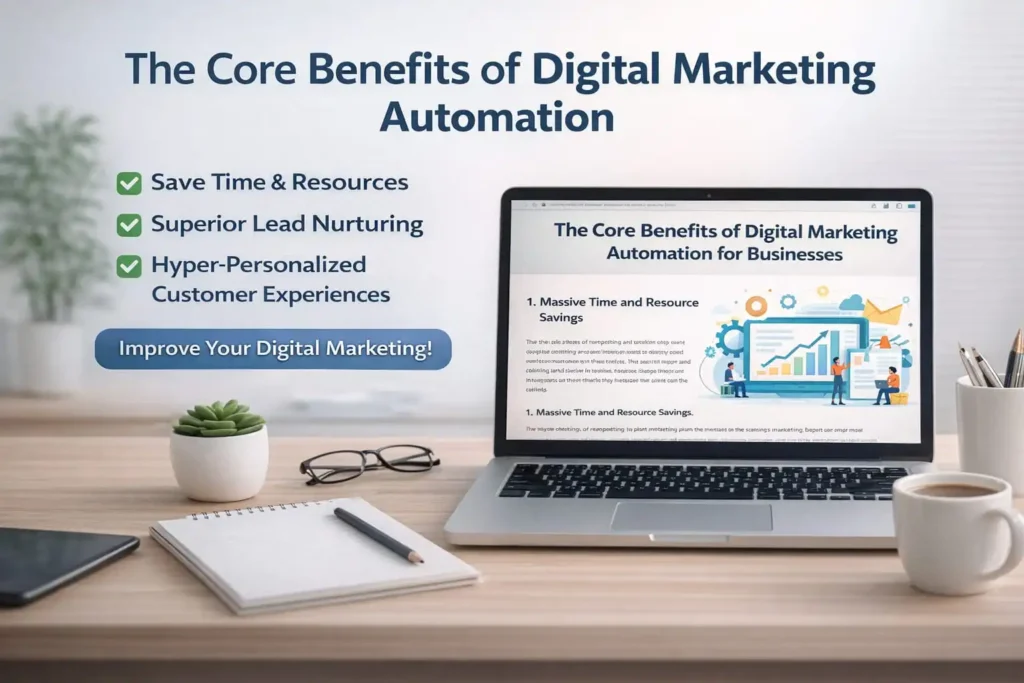
The Core Benefits of Digital Marketing Automation
Making automation a part of your digital marketing plan is no longer a luxury reserved for giant corporations, but a requirement for businesses of all sizes. Here’s why:
1. Massive Time and Resource Savings
The first advantage of integrating digital marketing automation into your strategy is the amount of time you save. By automating processes like social media scheduling and email campaigns, your team of marketers can focus on more creative, higher-level thinking and on building meaningful relationships with your top clients.
2. Superior Lead Nurturing
It is rare for a customer to purchase their first experience with your brand. Lead nurturing is building relationships with buyers at each stage of the sales funnel. Marketing automation helps you identify where your leads are in their journey and automatically deliver them relevant content to move them along the way to conversion.
3. Hyper-Personalized Customer Experiences
Consumers are accustomed to personalization. Marketing messages that are too generic and lack personalization are just not going to cut it anymore. Marketing automation platforms for digital marketing track consumer behaviors such as pages viewed, emails opened, and products clicked on. This allows you to deliver highly personalized marketing messages that make the consumer feel understood.
4. Data-Driven Decision Making
These tools have powerful analytics systems. You don’t have to speculate which marketing campaigns are doing well. You can monitor the number of opens, clicks, conversions, and cost per customer acquisition. You can make adjustments to your strategy in real-time.
5. Increased ROI and Reduced Costs
Of course, there is a cost to buy marketing automation tools. However, the ROI is tremendous. You can execute complex marketing campaigns without having to recruit an army of marketing executives.
Key Areas to Automate in Your Business
If you are a newbie to digital marketing automation, all these opportunities might sound too good to be true. Here are the most critical areas to automate for a newbie:
* Email Marketing
Email is the lifeblood of digital marketing automation. You can automate:
- Welcome Sequences: Greeting your new subscribers and introducing your brand.
- Abandoned Cart Recovery: Targeting your e-commerce customers who have abandoned their carts.
- Milestone Emails: Giving your customers a discount on their birthdays or anniversaries.
- Re-engagement Campaigns: Targeting your inactive customers to win them back.
* Social Media Management
You don’t have to have your phone glued to your hand 24/7. Automation tools enable you to:
- Schedule posts on platforms such as Instagram, LinkedIn, X, and Facebook weeks in advance.
- Create automated replies to frequently asked questions in your DMs.
- Track brand mentions and sentiment across the web.
* Lead Generation and Scoring
However, not all leads are created equal. Automation can help you:
- Capture lead information through smart forms and pop-ups.
- Lead Scoring: Automatically assign points to leads according to their interaction. For instance, +5 points if they open an email or +10 points if they visit the pricing page. Once they have reached a particular score, they can be auto-forwarded to the sales team.
* Customer Onboarding
First impressions are important. When someone purchases your software or signs up for your service, you could provide them with an automated sequence on how to use your product, which would reduce churn rates and increase satisfaction.
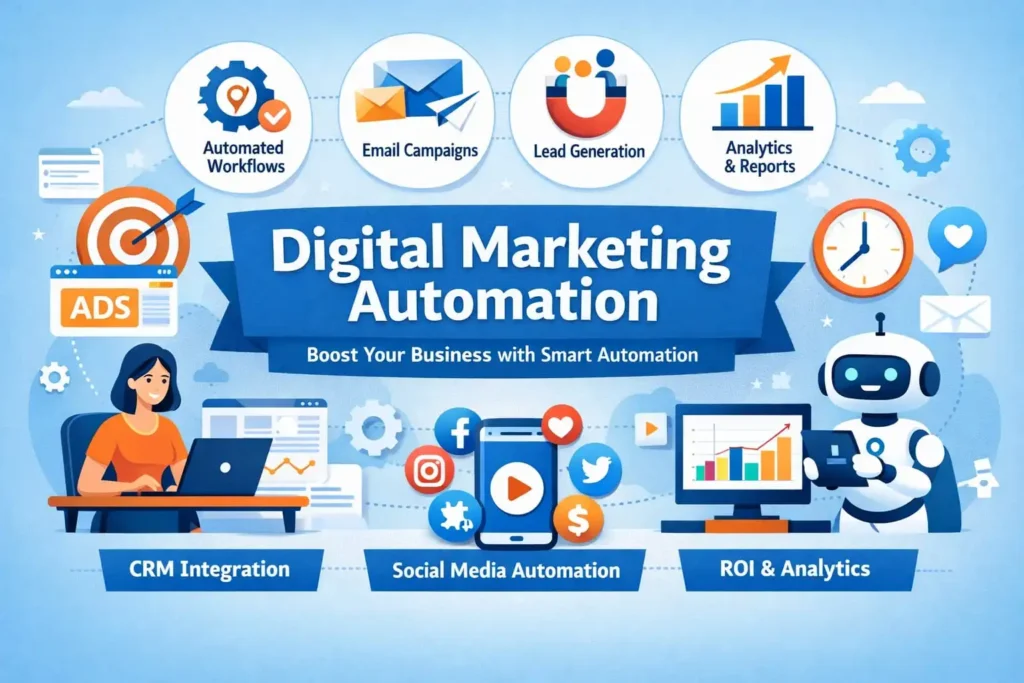
Digital Marketing Automation is an essential tool for businesses that want to automate their marketing activities and improve productivity. With tools like HubSpot, businesses can use an all-in-one inbound marketing solution that includes robust CRM and workflow capabilities. Another tool is ActiveCampaign, which provides robust email automation capabilities and workflow design.
Small businesses and newbies to automation can use Mailchimp for simple and affordable automation solutions. E-commerce businesses are also benefiting from tools like Klaviyo, which provides seamless integration capabilities for platforms like Shopify and allows businesses to track ROI for their SMS and email marketing campaigns. Another tool is Zapier, which helps businesses automate different activities by integrating different apps and increasing productivity. Digital Marketing Automation is a tool that helps businesses provide a better customer experience and achieve better results without having to do a lot of work.
Step-by-Step Guide: How to Implement Digital Marketing Automation
Ready to Get Started?
Let’s begin with these logical steps that will lead you through a smooth transition.
**Step 1: Define Your Goals**
Before you buy the software, you must define what you want to accomplish. Do you want more leads? Do you want more emails opened? Do you want fewer cart abandonments? It is always important to define KPIs or Key Performance Indicators.
Step 2: Map the Customer Journey
Grab a whiteboard and map out the exact journey a stranger must take to become a paying customer. Identify the “touchpoints” where automation can make the journey easier.
Step 3: Segment Your Audience
Segment your audience into unique groups based on demographic, behavioral, and/or buying characteristics. The more your audience is, the more targeted your automated marketing efforts will be.
Step 4: Choose Your Software and Build Workflows
Choose a software from the ones listed above based on your budget. Remember, start small. Create one simple workflow, such as a welcome email series, before trying to automate your entire business.
Step 5: Test, Measure, and Optimize
Automation is not “set it and forget it.” A/B test your subject lines, track your conversion rates, and continually tweak your workflow to improve performance.
Common Mistakes to Avoid in Digital Marketing Automation
However, there are some common mistakes that many companies make in their use of Digital Marketing Automation, which can limit the benefits. Some of these mistakes include:
- Over-Automation
Digital Marketing Automation should not be used to the point that it becomes too robotic. This can annoy the audience. - Lack of Personalization
The lack of proper personalization in marketing campaigns can limit their conversion. Therefore, proper personalization should be used in all marketing campaigns. - Ignoring Data Analysis
Some marketers make the mistake of not analyzing the data collected from marketing campaigns. This can limit the benefits of marketing. - Lack of Proper Segmentation
The lack of proper segmentation in marketing campaigns can limit their results. Proper segmentation should, therefore, be used in marketing.
Future Trends in Digital Marketing Automation
Digital Marketing Automation is a field in constant evolution. Here are some of the trends shaping the future of Digital Marketing Automation:
- AI-Powered Automation
Artificial Intelligence is making automation more intelligent by predicting customer behaviors. - Chatbots and Conversational Marketing
Automated chatbots are making a significant impact in customer support. - Omnichannel Automation
Businesses are using automation across multiple channels like email marketing, social media marketing, SMS marketing, etc. - Predictive Analytics
Automation is using data analytics to predict future customer behaviors and act accordingly.
How to Choose the Right Digital Marketing Automation Tool
It is very important to choose the right tool to ensure your success. The following are some tips to help you choose the right tool:
- Define Your Budget: It is important to choose the right tool that fits your budget and business size.
- Check Features: Ensure the tool supports email marketing, CRM, analytics, and integrations.
- Ease of Use: Choose the right tool that is easy to use.
- Scalability: Ensure the tool is scalable to grow with your business.
Conclusion
Conclusion: Digital Marketing Automation is the link between working hard and working smart. It is the way to free your team to work creatively, strategically, and on a deeply human level, by automating the tedious work that fills your day. Whether you’re a young startup or an established corporation, automation is the way to build a sustainable business in today’s digital age.
So, start small, focus on delivering value to your customers, and see how automation can turn marketing into a well-oiled, revenue-generating machine.